Why solar panels in Palmdale and Lancaster get dirty so fast
The Antelope Valley has great sun for solar and hard conditions for panels. What desert dust does in Palmdale and Lancaster, and how often to clean.
September 15, 2026
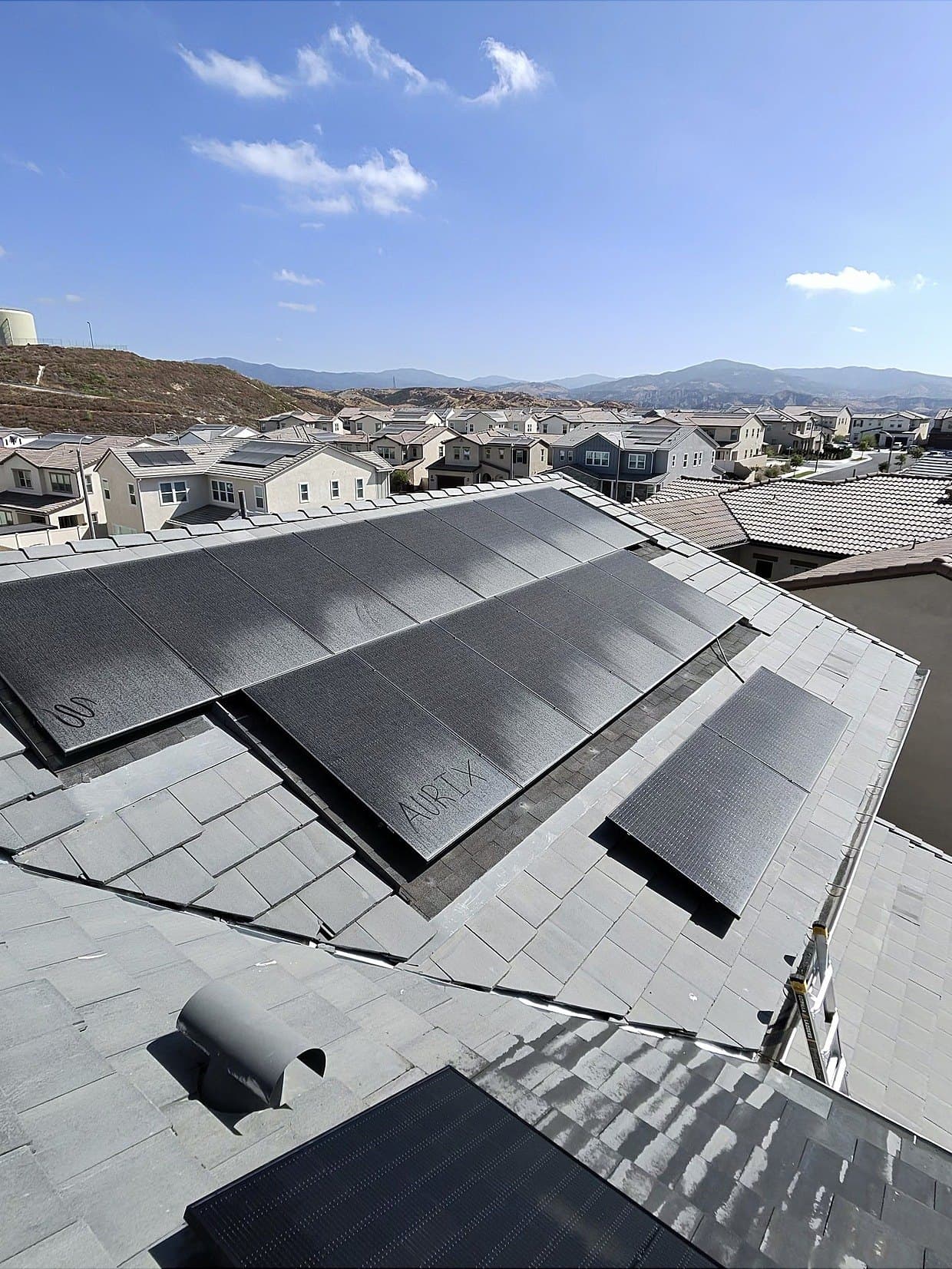
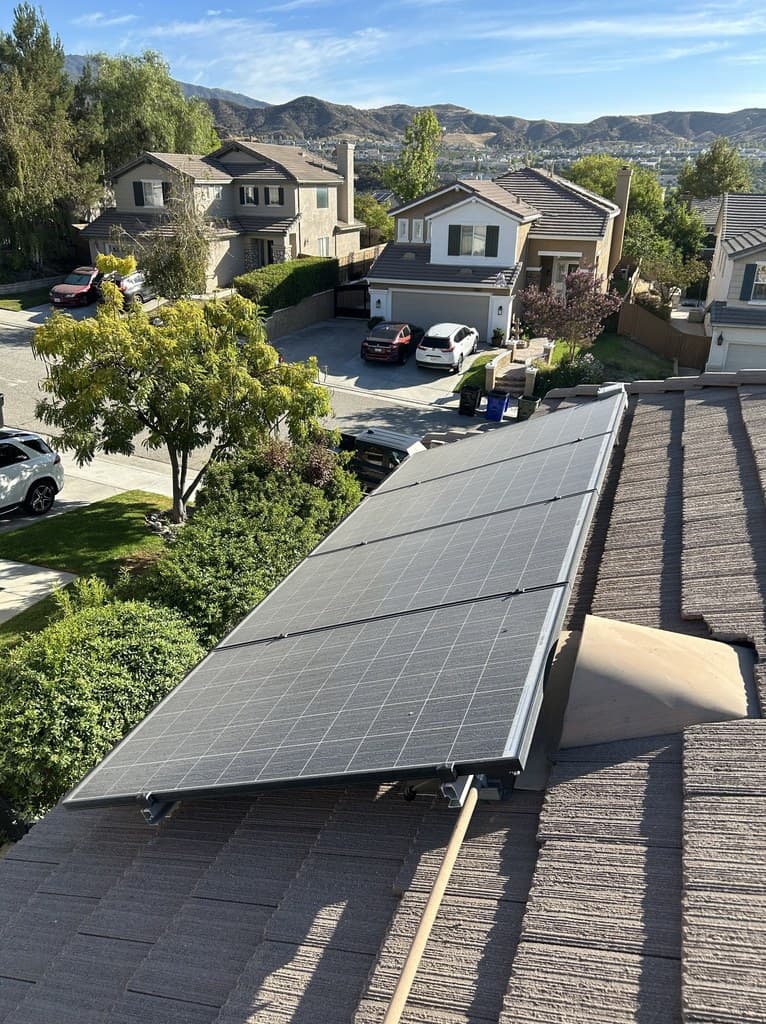
Drive through Palmdale or Lancaster and count the rooftop arrays. The Antelope Valley has some of the highest residential solar adoption anywhere in Los Angeles County, and for good reason: clear skies, long days, and very little shade. Lancaster adopted a rule in 2013 requiring solar on new homes, years before California required it statewide.
The same conditions that make the high desert great for solar are hard on the panels themselves. Homeowners who moved up from the Santa Clarita Valley or the San Fernando Valley are often surprised by how quickly their arrays go from black to gray.
Three things the desert does to an array
- Wind. The Antelope Valley is open to the desert on most sides, and near-constant wind carries fine dust onto every roof. In Lancaster especially, there is very little natural shelter between the arrays and open ground.
- Alkaline dust that clings. Desert dust is mineral-rich and fine. With overnight dew it forms a film that bonds to the glass instead of blowing back off.
- Almost no rain. Months can pass without meaningful rainfall, so nothing moves the dust along. What lands in spring is often still there in fall.
Why a hose makes it worse
Antelope Valley groundwater is hard even by Southern California standards. Rinse a dusty panel with tap water on a hot afternoon and the water evaporates almost immediately, leaving its minerals behind as white spots on top of whatever dust it did not move. Do that a few times and the panel carries a mineral layer as well as a dust layer.
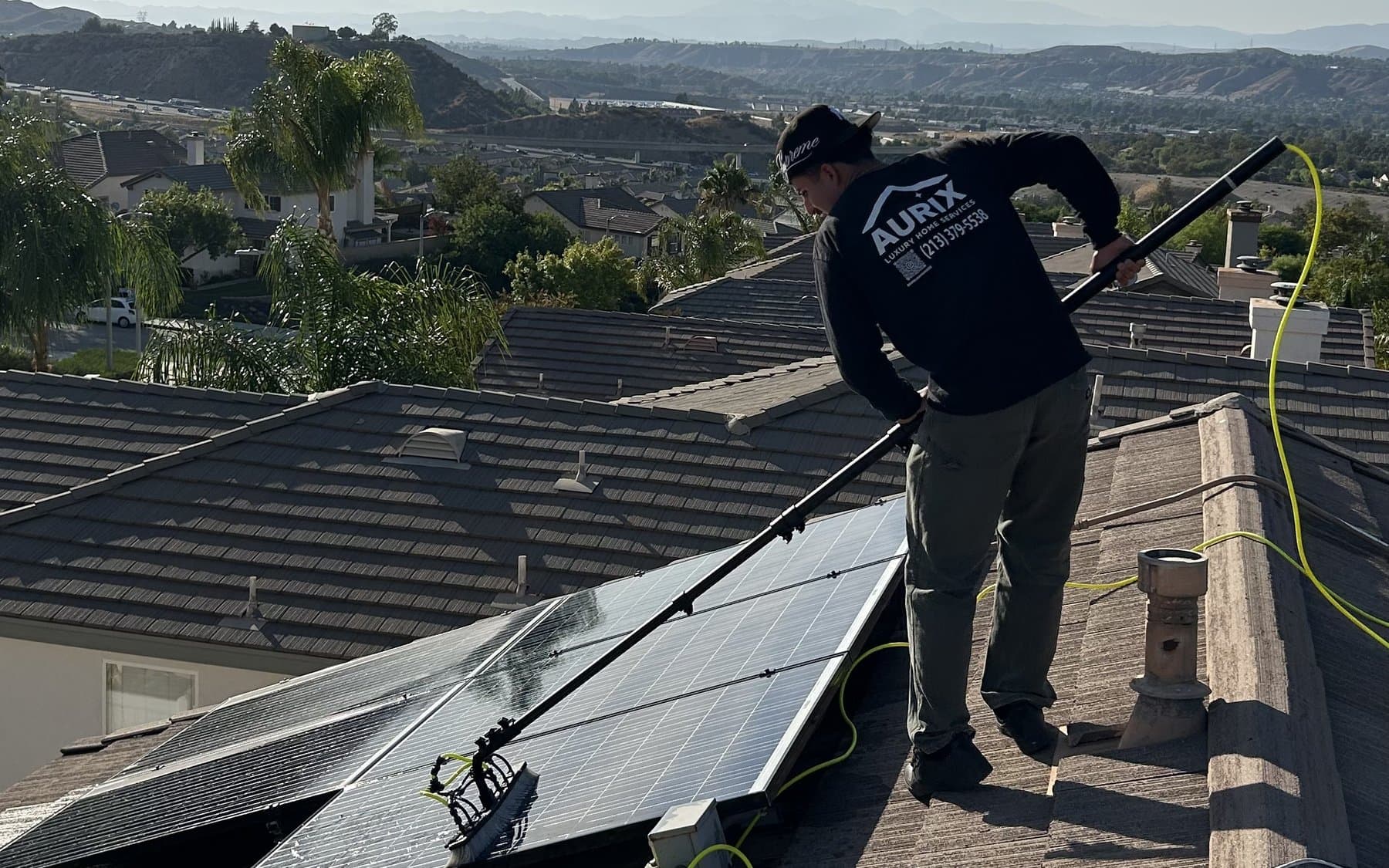
This is where purified water stops being a nicety. Water with the minerals removed dries clear, and paired with a soft-bristle brush it lifts bonded dust without anything abrasive touching the glass.
How often to clean in the Antelope Valley
- Lancaster: quarterly for most homes. It is the windiest and most exposed part of the valley.
- Palmdale: every three to four months for most homes, sooner on the open edges of town.
- Quartz Hill: every three to four months, and more often for ground-mounted arrays, which sit closer to the dust.
- After a dust storm or a nearby fire: as soon as it is safe, before the film bonds through the heat.
That is roughly twice as often as a typical Santa Clarita home. A standing plan makes the most sense up here, because the dust does not take a season off.
Arrays that came with the house
Many Antelope Valley homes were sold with the solar already on the roof, and panels you did not choose are easy to forget. If yours have been up for years and nobody remembers the last cleaning, start with an assessment: photographs of the glass, the perimeter, and the space underneath, where birds often settle on arrays that go untouched for months.
Need a hand with this?
We handle it across Santa Clarita and the surrounding valleys.