How often to clean solar panels in Southern California
Panel manufacturers say rain handles it. In an inland valley that gets almost none for eight months, that advice leaves a lot on the glass.
June 2, 2026
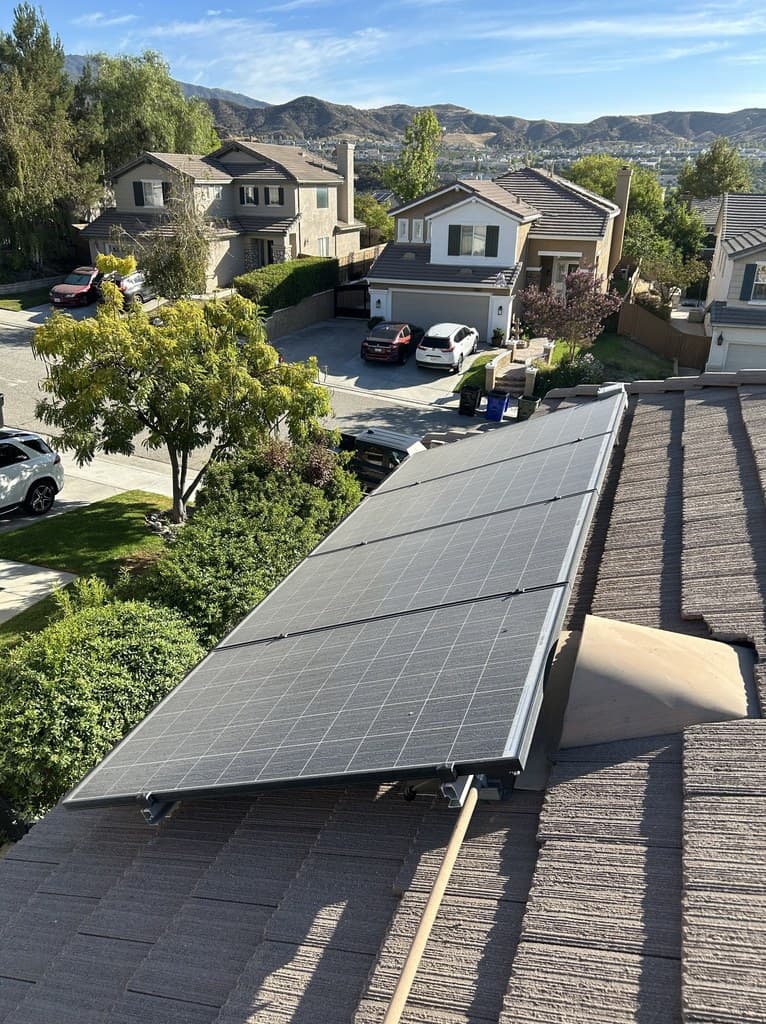
Nearly every solar installer tells homeowners the same thing at signing: the panels are self-cleaning, rain takes care of it, do not worry about maintenance. In a climate with regular year-round rainfall, that is broadly true. Santa Clarita is not that climate.
What actually builds up on an array
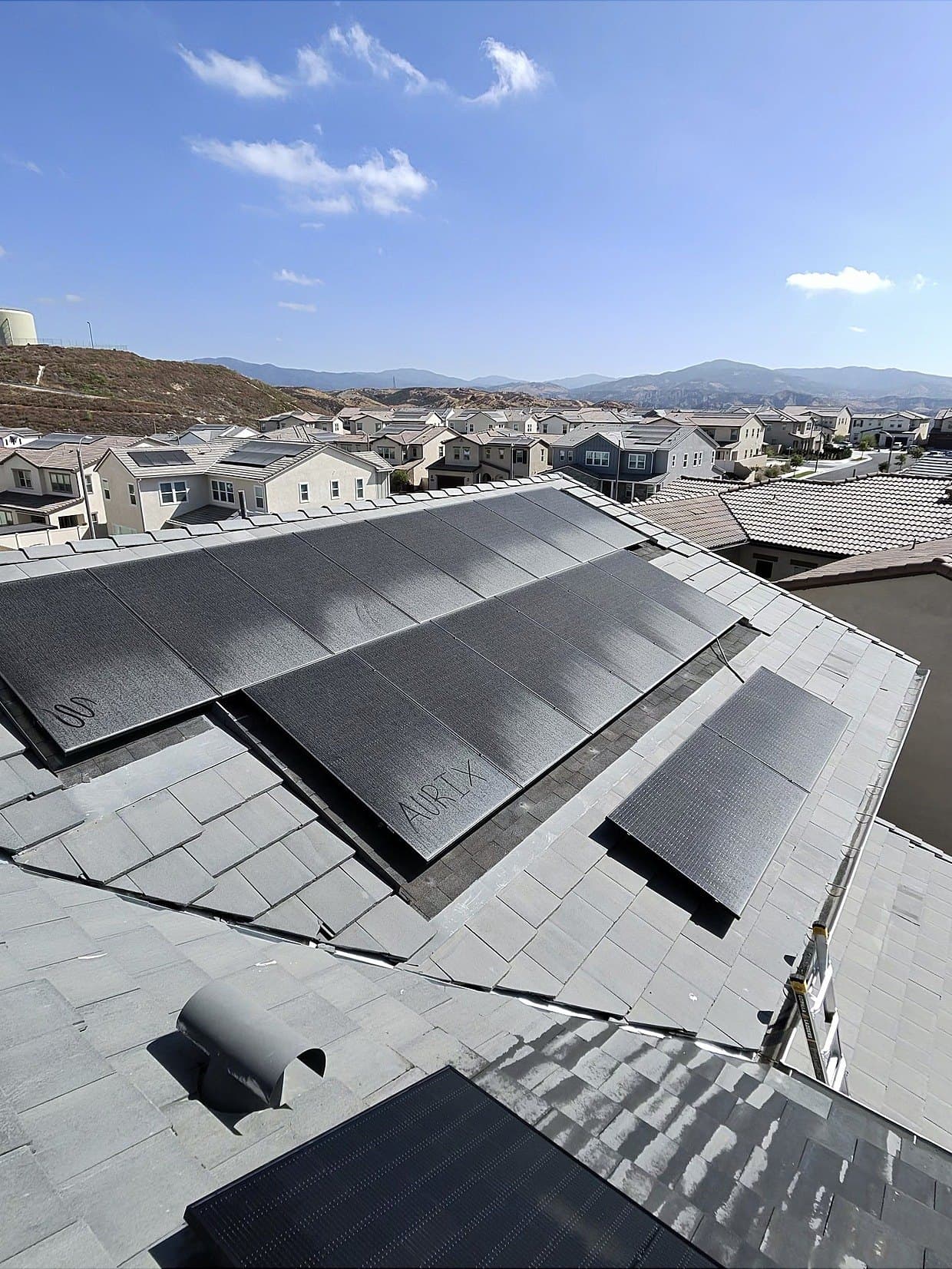
Soiling is the industry term for anything that settles on the glass: dust, pollen, exhaust film, agricultural drift, mineral residue from sprinkler overspray, and bird droppings. In our valley it arrives steadily and, without rain, it does not leave.
The layer most homeowners picture is a uniform gray film. The one they do not picture is what sits underneath the panels: droppings and nesting debris on the roof surface itself, in a space that is invisible from the ground and difficult to reach without removing panels. By the time it is obvious from the driveway, it has usually been building for a season or more.
Why any of it matters
A solar panel converts light into electricity. That is the entire mechanism, and it is why soiling is not a cosmetic problem: every particle sitting on the glass is light that never reaches the cell underneath it. A clean array gets to do the job it was installed to do. A dirty one does not, and in a climate where the film can sit undisturbed from April to November, that is most of the year.
Over a system you will own for twenty or thirty years, keeping it clean is straightforwardly worth doing. What nobody can honestly tell you is the number. How much a specific array gains back after a cleaning depends on how soiled it was, the season, the weather, shading, and the equipment itself. Treat any company that quotes you a percentage before seeing your roof with suspicion. Ask instead for before-and-after photographs, which are something they can actually show you.
A realistic schedule for our valley
- Standard suburban roof: every 3 to 6 months, ideally hitting one clean just after pollen season ends.
- Under or near trees: every 3 months. Sap and droppings accumulate far faster.
- Near open land, construction, or the freeway corridor: every 3 months for dust load.
- After any significant wildfire ash event: as soon as it is safe. Ash is alkaline and should not be left to sit and bond.
Why the method matters more than the frequency
Cleaning panels badly is worse than not cleaning them. Abrasive pads leave micro-scratches that scatter light permanently. Household detergents leave a residue film that re-attracts dirt faster than before. And tap water, especially hard water like ours, dries into exactly the mineral deposits you were trying to remove.
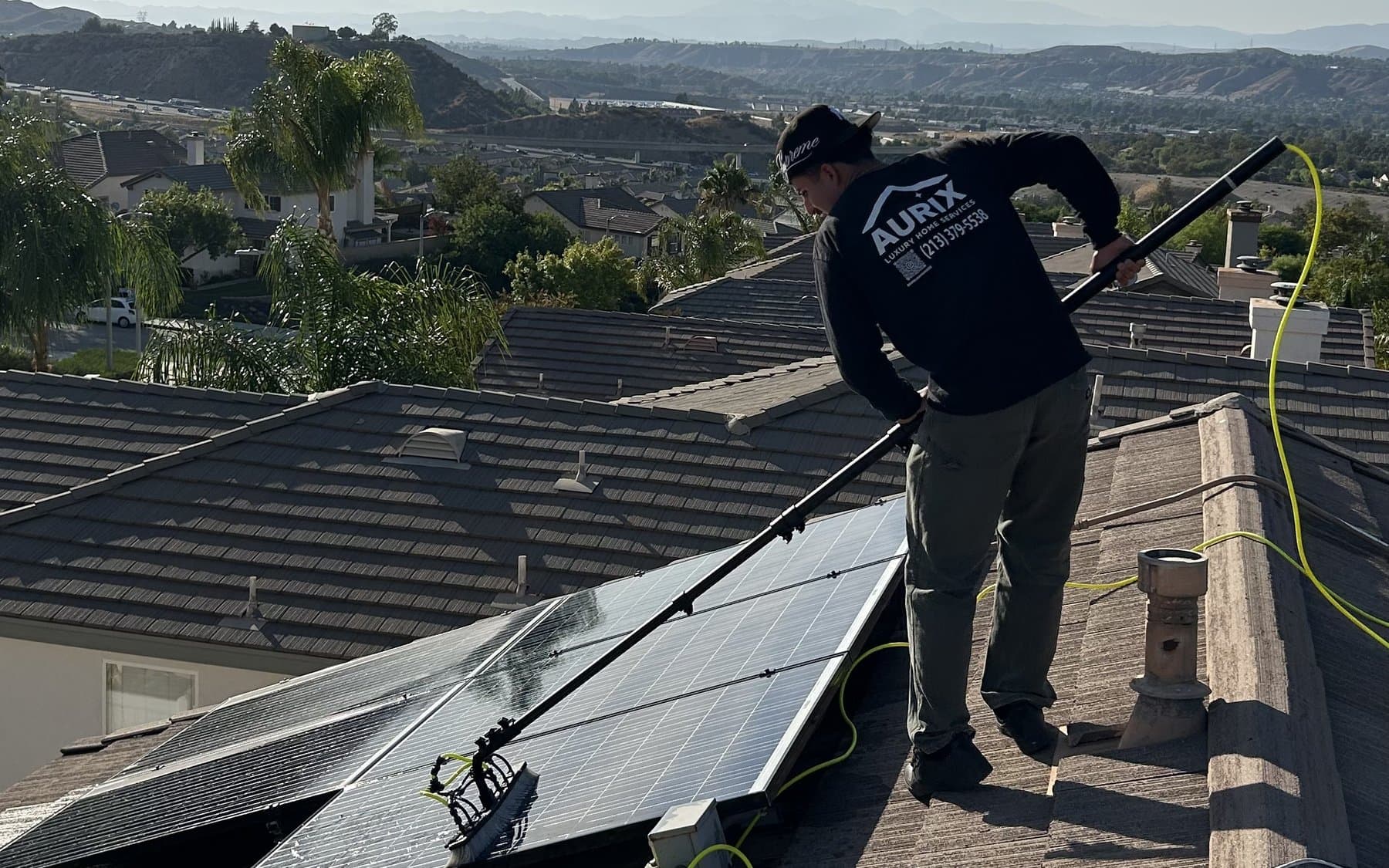
The method we use is soft-bristle brushes fed with purified water. Purification strips the dissolved minerals out, so the water dries spot-free with nothing left behind, and nothing abrasive or chemical ever touches the glass. If your installer or manufacturer has specific requirements for work on the array, tell whoever cleans it before they start.
One practical note: ask whoever cleans your array to look underneath it, not just across it. Bird activity in the gap between the panels and the roof is the single most common thing we find that a homeowner did not already know about, and it is far easier to deal with early than after a season of accumulation. Ask for photographs either way.
Need a hand with this?
We handle it across Santa Clarita and the surrounding valleys.